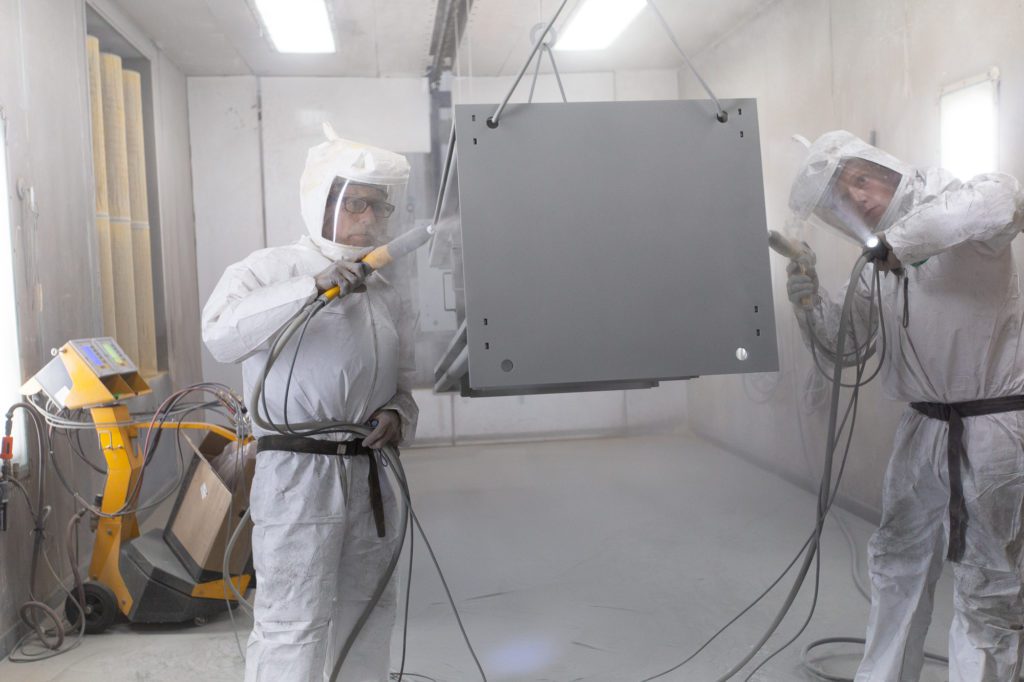
Rolling parts into a cure oven sounds simple enough until uneven heat leaves thick frames sticky or a careless bump rubs uncured powder clean off a finished corner. How you rack, space, and roll metal into the chamber dictates whether parts bake evenly or turn into costly strip-and-recoat rework. Smart loading habits keep high-capacity powder coating ovens running as productive workhorses rather than chronic bottlenecks on the shop floor.
Cart Loading Works Well for Heavy and Mixed-Size Parts
Fabricators lean on rolling carts whenever they handle bulky weldments, structural tubing, equipment cabinets, or mixed runs that refuse to hang neatly from ceiling monorails. Staging an entire batch on a cart out in the prep zone lets crews organize everything beforehand, so doors open for just thirty seconds instead of bleeding heat while workers hand-carry items inside. Cart frames must leave ample breathing room along the walls and floor so forced air currents sweep across every joint rather than stalling against metal obstructions. A properly matched Reliant industrial powder coating oven gives operators clear internal margins sized specifically around their rolling carts and typical steel tonnage, ensuring usable capacity reflects real shop floor batches instead of empty brochure dimensions.
Hanging Parts Can Improve Airflow and Surface Access
Suspending workpieces from load bars keeps wet finishes off floor grates and cart shelves, which makes hanging ideal for brackets, bent sheet panels, and complex shapes needing 360-degree coverage. Hooks, swivels, and crossbars have to hold work securely so sudden stop-and-go jerks do not swing wet parts into each other on the way in. Leaving clear gaps between neighboring pieces lets circulating hot air wrap around every side, bringing the entire workpiece up to target metal heat at the same pace.
Fixtures eat up overhead headroom fast. Heavy clevis hooks, hanging chains, and multi-tier racks can swallow two feet of vertical drop before parts even touch a hook. Anyone comparing Reliant powder coating equipment for sale needs to measure total fixture drop from the overhead track down to the bottom edge of the metal. Taking that full hanging profile into account confirms whether Reliant powder coating ovens deliver enough physical height to roll parts in cleanly without frantic last-minute unhooking.
Rack Loading Makes Repetitive Production Easier to Control
Building dedicated hanging racks pays dividends when a shop runs the same brackets, chassis plates, or assemblies day in and day out. Welded hook pins establish fixed part spacing, speed up load counts, and remove the guesswork around how much steel goes into each bake. Standardized loading also makes oven data logging far more dependable, because thermal mass and air channels stay consistent cycle after cycle. Investing in an integrated Reliant powder coating equipment package supports this predictable cadence by matching spray booths, carts, and cure chambers to a single, repeatable industrial powder coating method.
Dense Loads Need More Space Than They Appear to Require
Cramming as many parts as possible onto a cart looks efficient on paper, but it routinely wrecks cure quality. Broad sheet metal panels act like solid dams against recirculated air, while tightly nested tubes create shielded pockets where heat takes far too long to penetrate. Heavy metal loads also soak up immense BTUs, forcing burners to work overtime just to reach target cure temperature.
Running a calibrated datalogger across a fully loaded cart reveals whether that tight arrangement actually works in real life. Probes stuck on parts at the top, center, and bottom of the rack show which pieces soak up heat quickly, which lag behind, and how many extra minutes the burner needs to lock in full powder crosslinking. High-output Reliant powder curing ovens handle demanding batch densities reliably, provided operators space components to let air circulate freely instead of chasing raw part count at the expense of finish durability.
Conveyor Loading Supports Continuous Production at Higher Volumes
Continuous finishing lines eliminate the stop-start delays of batch carts by running overhead chain conveyors straight through application and curing zones. Every link in the chain matters: hanger pitch, line speed, and heating tunnel length must sync with the exact cure specs of the powder coating. Modern Reliant powder coating systems are engineered around this steady travel, allowing automated wash stages, spray guns, and ovens to process thousands of square feet daily without building staging jams on the floor. This synchronized movement locks in a repeatable powder coating process where every bracket sees the exact same thermal curve.
Loading Sequence Can Shorten the Time Between Batches
Smart staging means the next production cart is racked, masked, and prepped well before the active batch finishes its bake cycle. Rolling the next cart right up to the threshold lets operators pull hot parts and shove the next load inside within seconds, cutting door-open dwell and keeping interior wall temperatures steady. Trimming five minutes of temperature recovery off every turn adds up to multiple extra batches across a typical two-shift schedule.
Grouping parts by cross-sectional gauge protects finish quality across varied runs. Baking thin sheet metal alongside heavy structural plate either discolors the light parts or leaves thick joints undercured. Reviewing a Reliant powder coating oven for sale gives plant buyers a chance to right-size burner output and box volume around their most common metal gauges, while broader Reliant powder coating equipment ties cleaning tanks, spray booths, and staging bays into a cohesive workflow.
Safe Loading Protects Both the Finish and the Equipment
Unbaked powder coating rubs off at the slightest touch, meaning operators need wide staging aisles and steady floor transitions to move parts without grazing door frames, baffles, or adjacent racks. Solid cart casters, balanced load trees, clear weight ratings, and level floor tracks protect expensive fabrications from accidental drops while making heavy steel easy to maneuver. An integrated powder coating system should make daily handling safer, cleaner, and more predictable from raw metal staging all the way to final unmasking. Facilities aiming to eliminate finish defects and improve throughput can consult Reliant Finishing Systems to configure custom Reliant powder coating equipment, robust Reliant powder coating systems, and a properly sized Reliant powder coating equipment package built around their specific part dimensions and daily output targets.




Leave a Reply