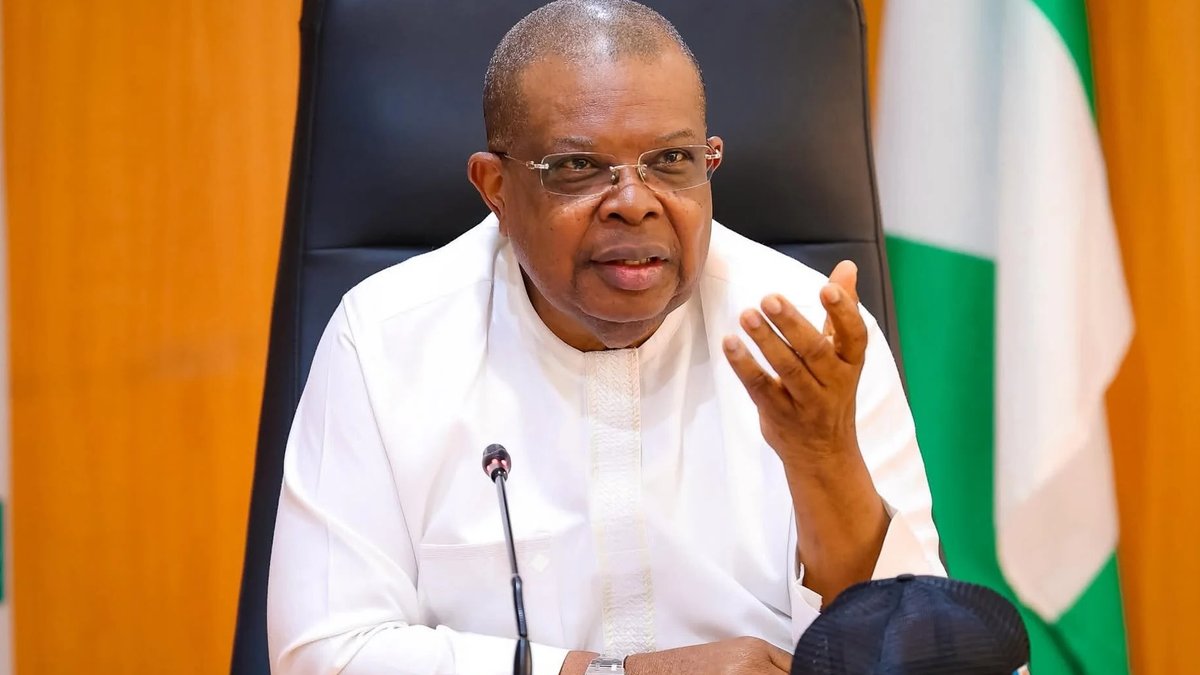
Nigeria’s Minister of Power, Joseph Tegbe, announced on November 9, 2026, that recent electricity supply disruptions have been resolved. Tegbe attributed the restoration to completed maintenance at the Egbin Power Station and repairs to the Benin-Egbin 330kV transmission line, which had been vandalized.
The outages, caused by scheduled maintenance, inadequate gas supply, and sabotage, affected consumers in Lagos, Ogun, Oyo, Kwara, and the Federal Capital Territory. Tegbe confirmed that electricity has been restored to several Lagos areas, including Ajah, Lekki, Ikoyi, Magodo, and Ikeja.
Transmission Repairs Boost Lagos Electricity Supply
Repairs to the Benin-Egbin 330kV transmission line have significantly increased electricity supply to the Lagos transmission complex, now exceeding 1,000 megawatts. The Federal Government collaborated with generation companies, the Nigerian Independent System Operator (NISO), the Transmission Company of Nigeria (TCN), and distribution companies to address operational issues across the electricity value chain.
The initial disruptions were exacerbated by reduced gas availability to thermal power stations and lower output from hydroelectric plants. Tegbe had previously stated that supply would improve within 48 to 72 hours as generating units resumed operation and repairs progressed.
Long-Term Plans for Grid Stability
While immediate challenges have been addressed, Tegbe acknowledged that consistent electricity supply requires further investment in generation and transmission infrastructure. He projected that Nigeria could achieve more stable electricity within three to five years, emphasizing the need to strengthen existing infrastructure to meet rising demand.
A proposed $2 billion east-west super grid aims to expand transmission capacity and enhance the national electricity network’s resilience. This project, connecting locations like Funtua, Gwagwalada, Ikot Ekpene, Benin, Epe, and Ilorin, targets an increase in grid transmission capacity from 4,000 megawatts to 19,000 megawatts. Procurement is underway, with construction expected to take about two years.
The government also anticipates increased private-sector involvement in electricity transmission over the next two to three years. Reliable power supply remains critical for housing, real estate investment, and businesses, as recent outages highlighted the costs of unreliable electricity.
Challenges Beyond Transmission
While the proposed transmission expansion could improve the investment environment, it is not a standalone solution. Gas supply, generation availability, distribution infrastructure, and the financial sustainability of electricity operators are equally key for delivering reliable power to consumers.




Leave a Reply