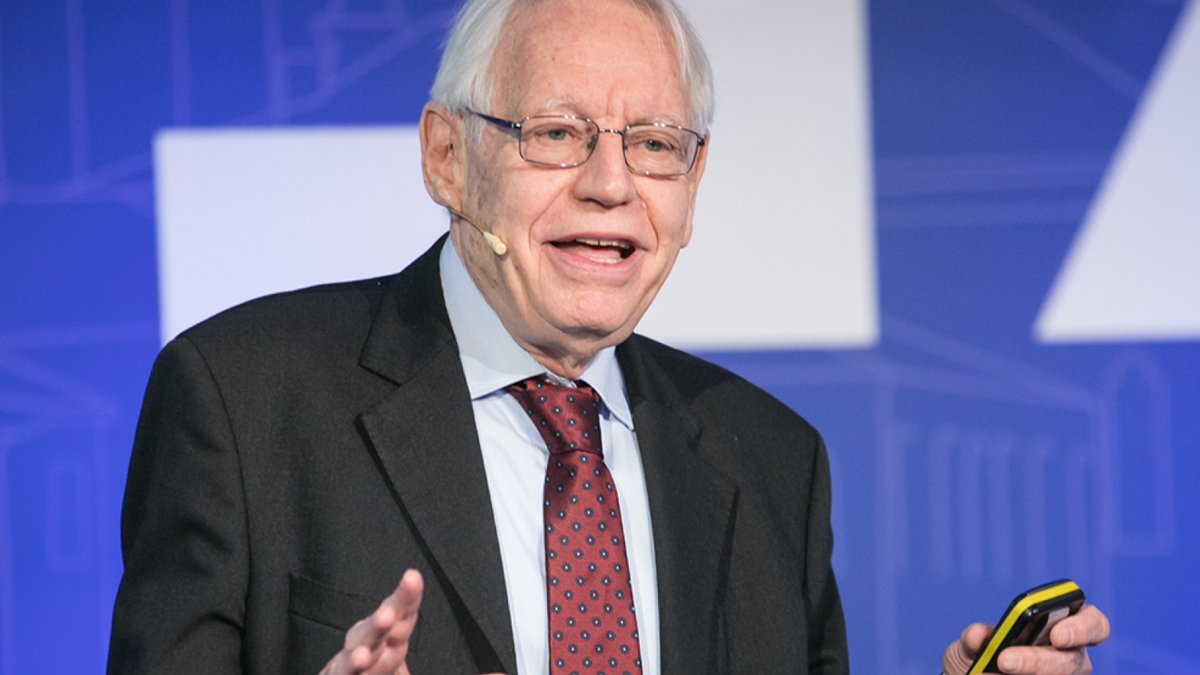
The INREV Annual Conference 2019 in Venice began with a presentation by Andrea Boltho, Director of Oxford Economics and Emeritus Fellow at Magdalen College, who offered an upbeat outlook on the global economy.
Boltho traced recent economic events, noting past growth in the US and recovery in China, Brazil, and Russia. However, he highlighted current challenges: Italy and Germany face manufacturing recessions, consumer confidence is falling, and Brexit looms.
He stressed that while Brexit is a minor issue, larger systemic risks like economic tightening in China pose greater threats. Boltho warned, “Another global crash is inevitable, but when I cannot be sure.”
He also drew an analogy between Germany’s low debt levels and the word “Schuld”, which means both “debt” and “guilt” in German, suggesting cultural attitudes toward debt may differ across countries.
EU’s fragile unity and investment trends
Boltho stated the EU‘s monetary union’s sustainability is questionable given growing North-South divides. He called the EU zone “fragile” and warned that financial market tensions could resurface quickly.
Despite a current slowdown, he predicted moderate, steady growth driven by domestic trends, a strong labor market, and declining unemployment. However, he identified Italy’s populist movement as the biggest threat to Europe’s stability, fearing its exit could trigger a domino effect and dismantle the EU.
When asked about investment preferences, the audience favored Western Europe for a 3-year horizon, with 49% of the audience in favor, and for a 10-year horizon, Western Europe was the first choice at 43%, followed by the UK at 33%.
Presentations from INREV members highlighted regional strengths: Western Europe’s growth and low political risk, the UK’s investment opportunities beyond London, Southern Europe’s sector-specific potential, and the Nordics’ stability and innovation.
After the presentations, audience interest shifted slightly, with more favoring Western and Southern Europe short-term, and increased long-term interest in the UK and Southern Europe.
Regional Investment Strategies and Expert Insights
Representatives from various regions presented their investment cases at the conference. Bill Hughes, representing the UK, emphasized the country’s openness to investment beyond London, highlighting growth in cities like Bristol and Newcastle. He described Brexit as a temporary challenge and showed long-term opportunities. Philippe de Martel, for Southern Europe, advised against direct regional investment, instead recommending sectors like student housing, healthcare, logistics, and data warehouses, driven by demographic trends. Therese Rattik, representing the Nordics, positioned the region as a stable, innovative market, citing its large economy and real estate potential. She focused on office and light industrial sectors and urged investors to prioritize cities over broader regions.
Audience preferences shifted after these presentations. The Nordics saw reduced interest despite their stability. A panel discussed impact investing, emphasizing its importance. Maaike Hof of MN stated that the world has an impact on their investments, and their investments have an impact on society. Nathalie Caillard explained the three-dimensional approach at AMPERE Gestion; risk, return, and impact, and stated that ‘Measuring the impact is important, but equally important is managing the framework’.
Impact investing and global strategies
The panel agreed on the need for a measurement framework.
A global investor panel addressed sustaining growth during slowdowns. They highlighted the benefits of global investment diversification and shared return expectations.
Investors expressed concerns like a potential US-China recession and negative interest rates.
Jeroen Dijsselbloem, former Eurogroup head, discussed Europe’s evolution, praising its formation but criticizing infrastructure gaps. He advocated for a common EU budget and fiscal union.
The conference launched the Asset Level Index, a €150 billion initiative for greater transparency in non-listed real estate, surpassing its €100 billion target.
Digitalization and the future of work
On day two, Bob Faith, Greystar CEO, discussed his company’s growth and European expansion.
A digitalization debate, moderated by Richard Bloxam of JLL, explored automation’s impact. Panelists emphasized the need for skilled talent and seamless technology integration to improve investment decisions.
Professor Linda Gratton discussed the implications of longevity, suggesting a reimagined life model with continuous education and flexible work-retirement phases. She proposed, why not take a piece of retirement in our twenties?
The event concluded with plans for the 2020 edition in Athens, leaving attendees with insights on economic trends, investment strategies, and the future of work and technology.





Leave a Reply