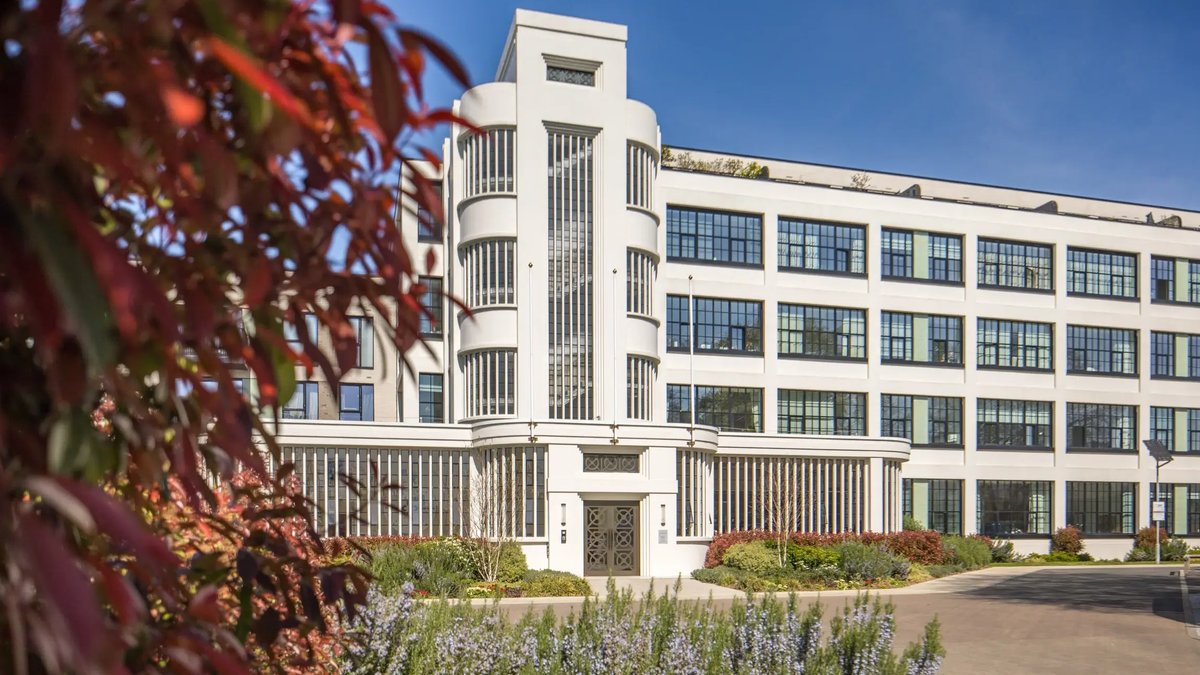
Barratt London secured a bronze award for Best Regeneration Scheme at last year’s WhatHouse? Awards, a recognition that highlights the scale of its Hayes Village project. The development sits on the former site of a Nestlé factory, a location that has undergone significant transformation over the last decade. Joe Antoniazzi, the sales and marketing director for the company’s West London division, spoke with Keith Osborne, editor of Show House magazine, about the journey from industrial wasteland to a thriving residential community.
From Factory Floor to Residential Quarter
Hayes was historically an industrial hub, defined by its rail and canal connectivity. For decades, the area remained largely unchanged. That began to shift roughly 10 to 15 years ago when large-scale regeneration efforts took hold. Barratt London is developing 1,500 homes on the site where the Nestlé factory once stood.
The restoration process was delicate, requiring the preservation of the Art Deco façade of the main factory building. Architects Wallis, Gilbert & Partners, well-known for their Art Deco work, helped lead the design. They also ensured the preservation of Wallis Gardens, a space containing trees that have stood since the factory’s inception. A section of the Grand Union Canal, previously inaccessible to the public, has since been opened to residents and visitors.
Antoniazzi, who has worked for Barratt London for 12-and-a-half years, recalls visiting the site around 2016 or 2017. He described the experience as “quite a bizarre” one. The building had just been vacated by Nestlé, which moved its headquarters to the north of England. Machinery still sat in the rooms, and noticeboards with staff names remained on the walls. It felt like a deserted place, with raw, stripped-out surroundings.
Today, the area feels residential. It retains a nod to its industrial heritage but offers a soft, homely atmosphere. Antoniazzi takes pride in the work done by the architects and the internal design team to achieve this shift.
Related Post: Georgia Home From Stranger Things for Sale
The physical changes extend beyond the buildings themselves.
Connectivity and Green Space
One of the primary reasons buyers are drawn to Hayes Village is the balance of green space and transport links. Nearly half of the development is designated as open green space. This includes the entrance gardens and various courtyard gardens within the buildings. The location is also within a 5-10 minute walk of the Elizabeth line station.
From there, residents can reach the city center in under 30 minutes. That speed is rare for a Zone 5 location. The development also features canalside living, with new public areas along the water’s edge. Residents benefit from the open space and the connection to the water.
The award itself has provided an external endorsement of the project. Antoniazzi noted that while the team always promotes their own work, third-party validation carries weight. The sales team uses the award in discussions with customers. He described the WhatHouse? Award as “the most prestigious award you can win” within the property development industry. For the staff, the win provides a renewed sense of pride. It confirms that their daily efforts contribute to something larger than individual sales targets.
For prospective buyers, the value proposition is clear. The combination of heritage architecture, extensive greenery, and rapid transit access creates a unique market position. Buyers are not just purchasing a home; they are buying into a restored community with strong local roots and modern infrastructure.
The green space is often the first thing visitors notice, creating an immediate positive impression upon arrival.
Related Post: Housing market sees shift as comps tighten
Supporting New Buyers and Future Schemes
Antoniazzi noted that the influx of buyers has widened since the completion of the Elizabeth line. Previously, the area was served by Heathrow Connect and local Great Western Railway services. Now, the entire Elizabeth line network feeds into the location. To support affordability, Barratt London offers several schemes.
A newer option, Rezide, is an equity loan scheme where a customer puts in 5% and the company provides an intermediary loan of 15%.
The company is involved in other major regeneration projects as well. Eastman Village, located on the former Kodak factory site, is a direct comparator. It features over 2,000 homes and is at a similar stage of construction. Unlike Hayes Village, Eastman Village does not retain the original façade. However, it preserves the original chimney, which now serves as an active flu for the development’s energy center. This landmark is a well-known part of the Harrow community.
Another upcoming project is Bollo Lane, situated on the Chiswick/Acton border. This is a joint venture with Places for London, part of Transport for London. The partnership, called the West London Partnership, focuses on sites near Tube stations, making them ideal for residential development.
The wider area is also seeing investment. Hayes town center has received funding for a high street facelift. Other developers have built on the former HMV vinyl factory site. There are large projects in the surrounding areas, including Southall. Antoniazzi believes the area is well balanced. It is not overpopulated with regeneration, but it has enough activity to give the neighborhood a new lease of life and attract a diverse demographic.




Leave a Reply