Running a food and beverage business can look exciting from the outside. There are new menu ideas to test, customers to serve, and opportunities to turn a small restaurant into a familiar local favourite. But behind every busy dining room is a long list of daily tasks: checking stock, managing staff, reviewing sales, monitoring expenses, and making sure every order reaches the right table.
The real challenge often begins when the business starts growing. What works for one outlet may become difficult to manage across three, five, or ten locations. Spreadsheets, handwritten notes, and separate applications can quickly turn routine work into a complicated puzzle. This is where an integrated restaurant management system becomes worth considering. Platforms such as Runchise reflect the growing interest in technology designed around the operational needs of food and beverage businesses.
1. Why Restaurant Operations Become More Complicated as a Business Grows
When a restaurant first opens, the owner may be able to supervise almost everything personally. They know which ingredients are running low, recognise regular customers, and can quickly resolve a problem in the kitchen. As the team and number of outlets expand, however, that hands-on approach becomes harder to maintain.
Information starts coming from different directions. A cashier reports daily sales, the kitchen requests additional ingredients, and a branch manager sends a separate stock report. If each department uses a different recording method, the owner may spend more time collecting information than making decisions.
Growth introduces another challenge: consistency. Customers expect similar food quality, service, and pricing whether they visit the original restaurant or a newly opened branch. Without clear processes and reliable records, maintaining that consistency can become increasingly difficult.
The solution is not necessarily to add more administrative work. Often, the better approach is to establish a standard operating process and use tools that help the team follow it consistently.
2. Bringing Daily Restaurant Activities into One Connected System
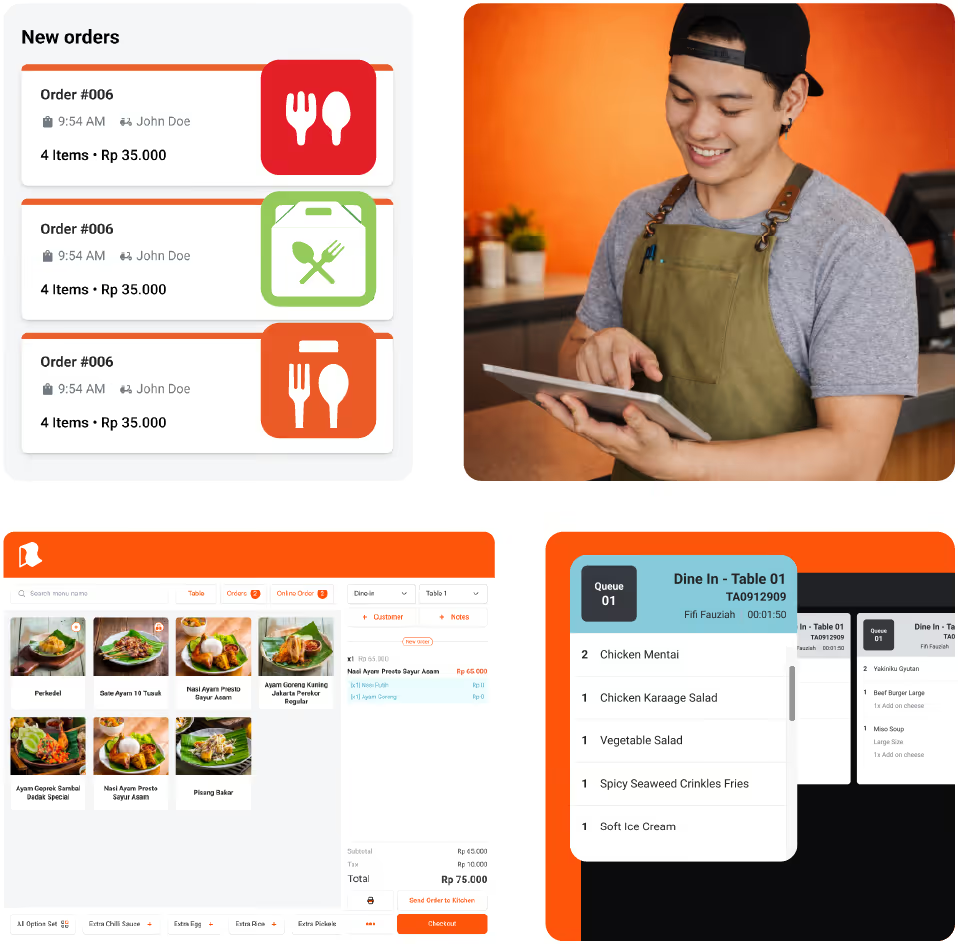
Many F&B businesses use separate tools for point-of-sale transactions, inventory, employee schedules, and financial reporting. Each tool may work well individually, but switching between systems can create unnecessary friction.
An integrated management system aims to connect important operational activities so that information is easier to access and review. Depending on the platform and configuration, this may include sales tracking, inventory monitoring, menu management, outlet performance, and business reporting.
Imagine a restaurant owner who manages several branches. Instead of asking every manager to prepare a different spreadsheet, the owner could review standardised reports through a central dashboard. This makes it easier to compare performance, identify unusual changes, and decide which outlet needs attention.
Integration does not mean that every decision should be automated. Restaurant operations still depend on human judgement, particularly when dealing with customer complaints, food quality, and staff development. Technology is most useful when it reduces repetitive administrative work and gives people better information to act on.
3. Inventory Management: Reducing Waste Without Running Out of Ingredients
Inventory is one of the most important areas of restaurant management because it directly affects food costs, menu availability, and profitability. Too much stock can lead to spoilage, while too little may force a restaurant to remove popular dishes from its menu.
A structured inventory process begins with accurate records. Restaurant teams need to know what ingredients are received, used, transferred, and discarded. Standardised recipes also help businesses estimate ingredient requirements for each menu item.
For example, if a café sells more chicken rice bowls than usual, sales information can help the purchasing team anticipate demand. When sales and inventory records are connected appropriately, managers may be able to identify unusual consumption patterns or investigate differences between expected and actual stock usage.
However, software alone cannot eliminate waste. Staff still need to record stock movements accurately, follow food storage procedures, and conduct regular physical counts. Supplier delivery schedules and ingredient shelf lives also need attention.
The goal is to make purchasing and preparation more predictable. Over time, better visibility can help an F&B business reduce avoidable waste while keeping enough ingredients available to serve customers.
4. Using Sales Data to Make Better Business Decisions
Restaurant owners often have access to more information than they realise. Daily transaction records can reveal popular menu items, busy operating hours, average spending per order, and differences in demand between outlets.
The difficulty is turning those numbers into practical decisions. A long report is not automatically useful if the owner cannot quickly understand what has changed or why it matters.
A well-organised reporting system can help highlight meaningful patterns. If a particular dish consistently performs well during lunch, the restaurant might adjust preparation schedules or staffing around that period. If sales decline at one branch while other locations remain stable, the owner can investigate local factors such as service speed, customer traffic, or menu availability.
It is equally important to look beyond revenue. A restaurant may generate impressive sales while facing rising ingredient costs, excessive discounts, or high labour expenses. Reviewing sales alongside costs provides a more balanced view of performance.
Data should support questions rather than replace critical thinking. Reports can show where something has changed, but managers may still need to speak with employees, observe operations, and understand customer behaviour before deciding what to do.
5. Standardising Service Across Multiple Outlets
Consistency is a major part of building customer trust. People return to a restaurant because they expect a familiar experience, whether that means a favourite dish, a predictable ordering process, or attentive service.
As a business expands, consistency becomes more difficult to maintain without documented procedures. Recipes may vary between kitchens, discount policies may be interpreted differently, and new employees may receive different training depending on the branch.
A practical starting point is to document essential standard operating procedures. These might cover opening and closing routines, food preparation, stock receiving, customer complaints, cleaning schedules, and cash handling.
Technology can support these procedures by providing shared information, standardised workflows, and consistent reporting. Managers can also use performance records to identify where additional training or operational support may be needed.
Still, standardisation should leave room for local circumstances. An outlet in a shopping centre may have different peak hours from a neighbourhood café, for instance. The objective is to maintain essential standards while allowing managers to respond sensibly to their customers and environment.
6. Choosing Restaurant Technology That Fits Your Business
Not every F&B business needs the same features. A single coffee shop may prioritise fast transactions and ingredient tracking, while a growing restaurant group may need consolidated reporting, multi-outlet oversight, and more structured controls.
Before choosing a platform, owners should map their current workflow and identify the problems that consume the most time. Are stock discrepancies common? Do managers struggle to prepare reports? Is it difficult to compare branches? Are orders, payments, and kitchen processes disconnected?
A few practical considerations can help guide the decision:
- Ease of use: Employees should be able to learn the system without unnecessarily disrupting service.
- Relevant features: Choose functions that address actual operational needs rather than paying for complexity the business will not use.
- Reporting quality: Check whether the available reports support the decisions managers make regularly.
- Scalability: Consider whether the system can accommodate additional outlets or changing workflows.
- Support and training: Understand the onboarding process and the assistance available when problems occur.
- Costs and integration: Review subscription fees, hardware requirements, implementation expenses, and compatibility with existing tools.
It is also sensible to test a new system in one outlet before rolling it out across the entire business. A pilot allows the team to identify practical issues, gather employee feedback, and refine procedures before making a larger commitment.
7. Building a More Sustainable and Manageable F&B Business
Restaurant technology works best when it forms part of a broader effort to improve the business. A new system cannot compensate for unclear responsibilities, inconsistent recipes, or a lack of staff training. Those foundations still matter.
Owners should begin with achievable goals. For example, they might aim to shorten the time required to prepare daily reports, improve inventory accuracy, or establish a consistent method for comparing outlet performance. Measuring progress against these goals makes it easier to determine whether the investment is delivering value.
Employee involvement is equally important. The people who handle orders, prepare ingredients, and close the restaurant every day often understand operational problems better than anyone else. Asking for their feedback can reveal issues that might otherwise be overlooked.
Ultimately, an all-in-one restaurant management system should make the business easier to understand and operate, not simply introduce another layer of technology. By connecting essential information, standardising routine processes, and helping teams focus on meaningful decisions, F&B owners can create a stronger foundation for growth.
The best system is not necessarily the one with the longest feature list. It is the one that fits the restaurant’s actual needs, supports its people, and helps the business deliver a reliable experience to customers day after day.




Leave a Reply